
The Mau Mau rebellion in 1952 was
undeniably caused by the growing tensions between the Kikuyu and the white
European settlers in Kenya. However, despite growing unrest, the precise causes
of the rebellion remain unclear. This essay will discuss a number of possible
reasons for the revolt, examining the economic, social and political tensions
caused by the colonial administration in an attempt to discover the real
reasons for the Mau Mau rebellion and why the Kikuyu were so unhappy with their
colonial administrators.
Arguably one of the most important
reasons for the Mau Mau rebellion was the economic deprivation of the Kikuyu.
The Kikuyu had long been unhappy with white settlers in Kenya taking their
land, and their economic deprivation lead to vast discontent throughout the
Kikuyu. Despite attempts to address this issue, the Kikuyu's were ignored.
Michael Coray has argued that by failing to create a system through which
Africa grievances against white settlers could be settled fairly, the Kikuyu
grew more dissatisfied with the colonial administrations failures, thus
playing a significant part in the development of the Mau Mau rebellion.
Economic deprivation continued throughout colonial rule; by 1948, 1.25 million
Kikuyu were restricted to 2000 square miles whilst 30,000 white settlers
occupied 12,000 square miles, demonstrating the extent to which the Kikuyu
were disadvantaged by the white settlers, causing them anger and resentment. As
a result to these poor living conditions, there was a huge increase in the
number of Kikuyu migrating to the cities; leading to poverty, unemployment and
overpopulation. Despite these factors, it has been argued that economic
deprivation was not of particular importance in relation to why the Mau Mau
rebellion broke out. Claude Welch has claimed that grievances were expressed
primarily on a tribal basis as opposed to a class basis, which he uses as
evidence to suggest that economic deprivation is not as significant a factor as
one might believe. However, regardless of whether or not it contributed
greatly to the break out of the Mau Mau rebellion, there is little doubt that
the unrest caused by economic deprivation had an impact on the Kikuyu, and
trough this contributed to the Mau Mau rebellion.
As well as economic deprivation, the
Kikuyu were arguably angered by their loss of economic independence during the
colonial period. As Eric Brown has stated, the loss of land to white settlers
meant not only that the Kikuyu were bereft of their land, but also that they
had to then find work in order to make a living; usually working for the white
settlers. Brown has paralleled this with Serfdom, and argues that Kikuyu
reliance on white settlers caused an increase in social tensions amongst the
Kikuyu. Though already at a disadvantage, the Kikuyu would also earn on
average only a fifth of the payment which white workers would earn for the same
amount of work,[8] which only furthered the Kikuyu resentment of the settlers.
Despite migrating to the cities, which one might consider puts the Kikuyu at an
economic advantage, the Kikuyu were in fact disadvantaged when considering
their prosperous position prior to colonial administration; coffee growing in
particular was a rewarding industry due to the fertile land held by the Kikuyu,
and so the prohibition of coffee growing imposed by the colonial government
crippled the Kikuyu. In this light, a rebellion against the British settlers
might be seen as inevitable. The Kikuyu were the most populous ethnic group in
Kenya, with what Brown calls a "flourishing society; therefore, when
the Mau Mau offered them an opportunity to revolt against British colonialism,
the group grew rapidly. One could then argue that a main reason why the Mau
Mau rebellion broke out was so that the Kikuyu could regain the economic
independence that they longed for, and were used to prior to colonial
disruption.
However, the social conditions of
the Kikuyu cannot be ignored when attempting to address the main reasons for
the break out of the Mau Mau rebellion. Harsh restrictions were placed upon the
Kikuyu; they were taxed heavily (which when one considers that they were
earning only a fifth of the wages white settlers were earning, seems
particularly severe), and racial tensions increased. White settlers saw the
Kikuyu as agricultural competition, thus explaining why such heavy restrictions
were placed upon them. Disciplinary measures were introduced by white
settlers on the Kikuyu who worked on their land; workers were often tortured or
abused by the white settlers. This horrific treatment of the Kikuyu only
angered them further and caused greater discontent between black and white.
Alongside their economic deprivation, the Kikuyu and other people of Africa
were made to feel like outsiders within their homeland, and became alienated
from society. Many Kikuyu had no choice but to become squatters on white land,
which to them seemed degrading considering the land was rightfully theirs. There were also increasing tensions between the Kikuyu people themselves.
Kikuyu land owners and those forced to work on white land began to despise each
other; Furedi argues that this led to the land owners and their white allies
releasing "a wave of repression onto those with no land, thus increasing
social tensions throughout Kenya. This meant that poorer Kikuyu workers were
not only angered by the white settlers but also by their own people, thus
strengthening the argument that the Mau Mau rebellion was a 'peasant revolt'
against the wealthy and the white.
The vast growth of the Kikuyu
Central Association also accounts for the break out of the Mau Mau rebellion in
1952. The KCA made its aims clear to reclaim the land taken from them - and ran
a campaign of civil disobedience in order to protest against the white settlers
taking their land, which demonstrates the unrest amongst the Kikuyu prior
to the rebellion. The KCA also made radical demands, for example the return of
their land, in hope of returning to their economic position prior to colonial
rule. The growth in membership of the KCA can be accounted for in the popular
demands it made; for example, higher wages and the right to grow coffee
again.[20] It has already been established that the Kikuyu were greatly unhappy
with their social and economic position within Kenya, and so the KCA offered
them an opportunity to voice their discontent and attempt to make a change
through convincing the government that if their demands were not met, they
would create more trouble. Despite these protests, the KCA was largely
ignored by the colonial government, thus furthering tensions between the
two. The KCA's grievances originated in the 1920s and 1930s, and so by the
time the Mau Mau rebellion broke out in 1952, decades had passed with little
change to benefit the Kikuyu, and therefore the rebellion had arguably been a long
time coming. Consequently, the growth of the KCA reflects the growing tensions
amongst the Kikuyu which led to the Mau Mau rebellion of 1952.
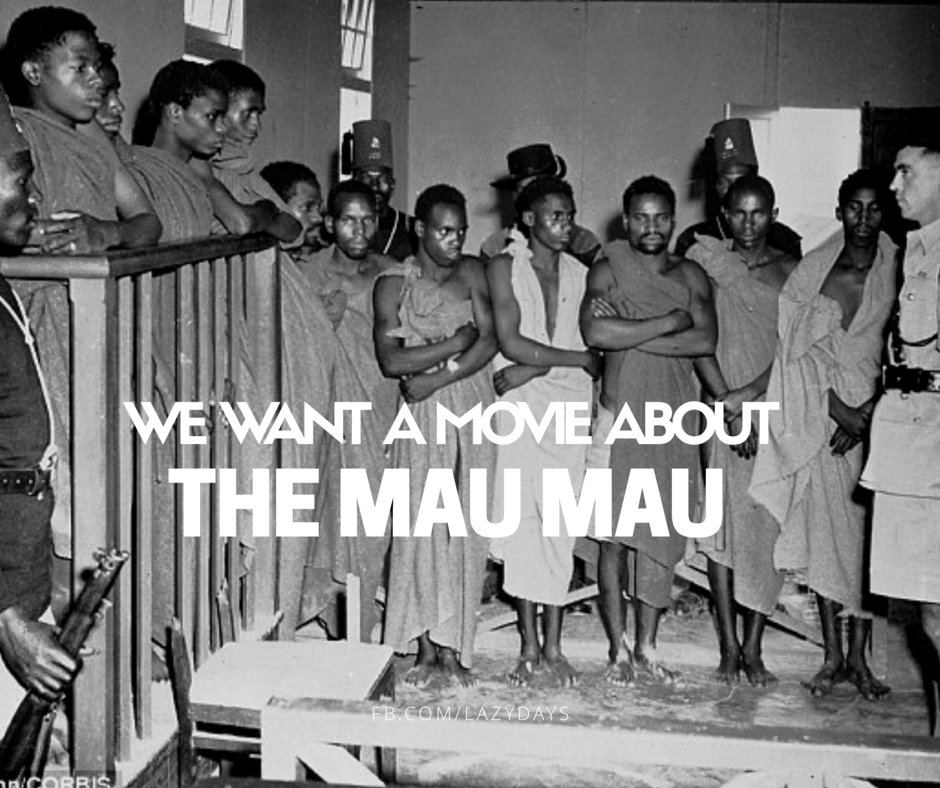
Another key reason for the break out
of the Mau Mau rebellion in 1952 was the internal divisions within the Kikuyu.
It has been argued that there "never was a single Mau Mau. One
possible reason for this argument is that the Mau Mau never made their goals
clear; many have attempted to discover their goals through Mau Mau actions, and
yet there is no solid evidence to suggest what the Mau Mau's goals might be.
Clough has argued that Mau Mau goals were political, and that they wanted to
"drive out the white settlers and isolate African "enemies. There
is certainly some validity to this argument; as Clough notes, memoirs from Mau
Mau meetings show that a great effort was made planning what the Mau Mau
relationship should be with detained leaders, and how they would communicate
with the British to get their message across, demonstrating the importance
of political motivations. Others have argued that their goals were economical,
and that as previously stated the Kikuyu people strived to regain their
economic independence that was lost through colonialism.[26] The Mau Mau was a
rapidly expanding group, and therefore the lack of a well-known, common goal
meant that internal divisions were inevitable. Therefore the rebellion in 1952
was arguably caused by Mau Mau intentions to achieve something in order to
avoid being seen as a radical group without a goal. However, as Lonsdale has
pointed out, despite internal divisions, the Mau Mau were bound to each other
by hopes of citizenship and bureaucracy, and therefore perhaps the
broadness of such a goal benefitted the Mau Mau rather than causing a failed
uprising.
It can therefore be concluded that
there were a number of reasons for the break out of the Mau Mau rebellion in
1952. Arguably the most important cause of the rebellion was the economic
discontent of caused by white settlers claiming Kikuyu land and its consequences.
The restrictions placed upon the Kikuyu, both economically and socially, also
played a significant role in the break out of the rebellion, as the Kikuyu were
made to feel alienated from their own society and repressed by white settlers.
However, the most likely cause of the Mau Mau rebellion was a combination of
all the above factors, which led to a growth in discontent amongst the Kikuyu
and left them with no other alternative than to revolt. In this sense, it can
be concluded that there was not just one cause of the Mau Mau rebellion, but a
vast amount of varying causes encompassing economic, social and political
tensions.
0 comments:
Post a Comment